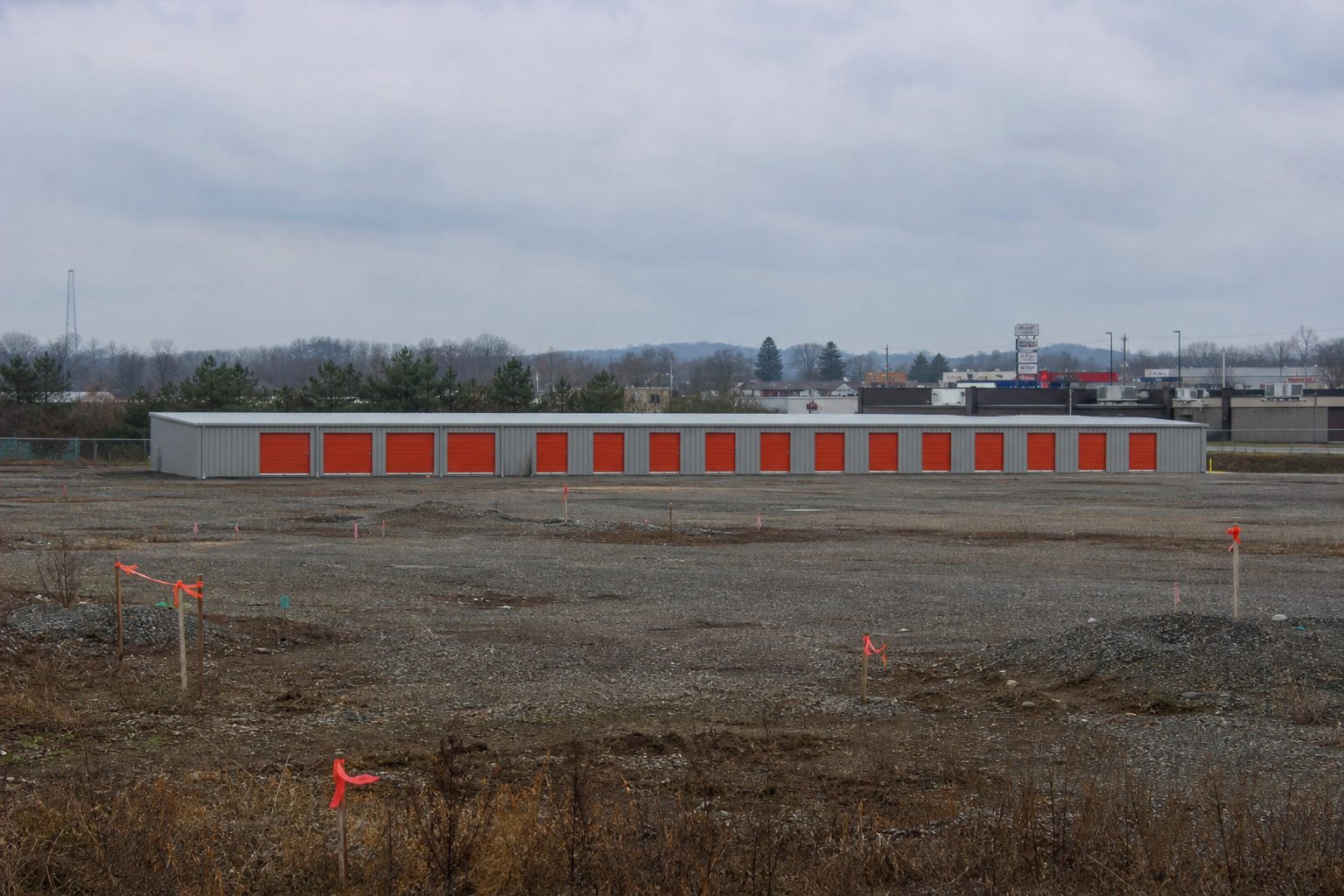
Why city councils restrict storage: sales tax, jobs per acre, and street frontage
Self storage faces more opposition at planning commissions than almost any other commercial use in the last decade. The reason is rarely about noise, traffic, or crime. Instead, the fight comes down to three economic realities: how much sales tax a property can generate, how many jobs it creates, and what image it presents along the city's main streets.
City budgets often depend on sales tax collection. Retailers, even small ones, send a share of every sale to city hall. Storage does not, unless it sells retail merchandise. From the city's perspective, every acre given to storage is an acre not generating tax revenue.
Job creation is another sticking point. Storage facilities with 100 to 600 units rarely employ more than three full-time people. Larger box stores or apartment complexes on the same parcel might support ten times that number. In economic development meetings, staff often show charts comparing jobs per acre, and storage ranks near the bottom.
Street frontage is the last major factor. Cities want their main roads and visible intersections to look lively and active. Storage, with its rows of doors and fencing, can signal long-term vacancy even when fully leased. Planners worry about "deadening" effect on retail corridors, which is why so many newer ordinances push storage projects away from main streets.
Keep reading: The Monthly Storage Facility Walk: Locks, Doors, Drains, and Lights
The four common tools: outright bans, conditional use permits, spacing rules, and design standards
Municipalities have built a toolkit to limit storage, but few use only one strategy. Owners need to recognize these four common regulatory levers, because each one can block a project or add expense.
Outright bans
Some cities simply prohibit storage as a permitted use in all or most commercial and industrial zones. Bans often appear in newly updated zoning codes. The intent is to stop new proposals before they start. In some cases, these bans are temporary moratoriums while the city reviews its policies, but many become permanent.
Conditional Use Permits (CUPs)
Where bans are politically difficult, the next most restrictive tool is to require a conditional use permit. This means storage is not allowed by right. Owners must present detailed plans, attend public hearings, and accept extra conditions. These can range from limited operating hours to requirements for enhanced landscaping, fencing, or façade upgrades.
Conditional use processes add months of uncertainty and legal expense. Even if the planning commission approves a project, the city council can overrule it. Some cities use a CUP process as a quiet way to discourage storage without facing legal challenges.
Spacing rules
Spacing ordinances prevent facilities from clustering. A typical rule requires a minimum distance, such as one or two miles, between storage sites. The stated goal is to avoid oversaturation and to distribute commercial uses more evenly. In practice, these rules create local near-monopolies for whoever gets permitted first.
Design standards
Many cities do not ban storage outright but instead impose design standards. These regulate setbacks, landscaping, façade materials, and even require multistory buildings or integrated office or retail space on the street-facing side. The idea is to make storage "blend" with mixed-use developments or commercial strips.
Design requirements can raise project costs and sometimes shrink rentable space, affecting long-term returns. For existing owners, though, tough design standards can slow new competition and increase the value of older, nonconforming buildings.
What a moratorium does to the value of an already permitted site
A moratorium freezes new applications, but it does not affect properties that already have entitlements. For owners with a site that has received zoning and building approvals, the effect can be dramatic. New supply is capped, so local vacancy rates stabilize or even fall.
When a city imposes a storage moratorium, the permitted sites within its boundaries become scarcer. Lenders and buyers often view these properties as more valuable, since they are insulated from immediate competition. Some owners see increased offers from REITs or regional players who want a foothold in a restricted market.
Appraisers sometimes add a premium for what is called "entitlement value." This is the difference between a piece of land that can be developed for storage and one that cannot, even if the physical improvements are identical. The premium depends on local demand, but in moratorium areas, it can be substantial.
Owners should keep detailed records of their site's entitlement history. Proof of compliance with earlier codes can be crucial if the city later questions the legal status of the facility.
Keep reading: Economic Occupancy, Rent per Square Foot, and Expense Ratio Explained
Phase two and expansion under nonconforming use and grandfathering
Many facilities are built in phases. Owners buy a larger parcel than they need, build out the first 100 to 300 units, and wait to fill up before adding the next set. Moratoriums and zoning changes can make phase two tricky.
Nonconforming use status
A property is "nonconforming" when it no longer meets current zoning but was legal when built. Grandfathering usually allows the original facility to operate, but limits expansions or major changes. Some cities allow minor additions, while others prohibit any new construction or even routine upgrades.
If the original approval included a master plan or phased site plan, owners can sometimes proceed with later phases. This depends on the wording of the entitlement. In some jurisdictions, missing a construction deadline can void expansion rights. If the entitlement is open-ended, the owner may be able to complete all planned phases even during a moratorium.
Substantial improvements and rebuilds
Disaster or deferred maintenance can force an owner to rebuild. Local rules vary widely. Some cities allow repairs to restore a nonconforming use, but prohibit any increase in rentable area. Others require strict conformance with current codes for any substantial rebuild, which can wipe out grandfathering.
Owners considering expansion or major upgrades should consult with a land use attorney. The risks of losing nonconforming status are real. Sometimes a single unpermitted addition or a lapse in business license renewal can trigger a fight over continued use rights.
Boat and RV storage as the current zoning flashpoint
In the last five years, demand for boat and RV storage has outpaced traditional household storage in many regions. As a result, more municipalities are now targeting open-lot storage in their zoning updates.
Open vehicle storage presents unique challenges. Residents complain about visual impact, fencing, and lighting. Neighborhood groups often object to large fields of parked vehicles, especially if they are visible from roads or adjacent homes. Fire officials sometimes raise concerns about access lanes and emergency response.
Cities are responding with new rules: Some require full screening with masonry walls or mature landscaping. Others prohibit new boat and RV storage near residential areas or along scenic corridors. In some markets, cities have set strict size limits for open storage parcels, forcing owners to split projects into multiple smaller lots or abandon expansion plans.
Insurance concerns also play a role. Local officials are hearing from fire marshals and underwriters who see risk in densely packed vehicles, fuel storage, and access control. New ordinances sometimes require wider drive aisles, fire hydrants, or even on-site security staff for large vehicle lots.
For facility owners, the challenge is to anticipate which way the local regulations are drifting before committing to any expansion. Boat and RV storage remains a growth opportunity, but it is now more likely to trigger neighborhood resistance and regulatory scrutiny than traditional climate-controlled units.
See how GateCodeDesk handles this for self storage
Reading your own entitlement file before you draw a single new building
Before starting any expansion or even a minor remodel, owners should review their original entitlement documents. These files may include conditional use permits, site plans, development agreements, and city council resolutions. Many owners have inherited properties and may only have a partial paper trail.
The entitlement file sets the legal boundary for what can be built and when. It is not unusual to find buried conditions, such as noise limits, phased construction timetables, or requirements for specific landscaping. Some files contain explicit language about future expansions, while others are silent, leaving room for city interpretation.
Checking these documents early can prevent wasted design fees and months of frustration. A clear entitlement can support a strong case for phase two even after a moratorium. A vague file can leave an owner exposed to city denial or neighbor lawsuits.
If there is any doubt, owners should contact city planning staff for a formal zoning verification letter. This document outlines what is allowed under current rules and is often required by lenders before funding construction. In some cases, it may be worth hiring a land use consultant to assemble a complete entitlement history, especially for properties with complex ownership or long operating histories.
Having organized entitlement records can also speed up online leasing and management. When a facility's unit map and legal status are clear, digital systems can accurately track which areas are available for lease, which units are subject to grandfathering, and which are pending city approval.
Where storage ordinances appear to be heading over the next few years
Self storage is unlikely to regain its status as an easy, by-right use in most cities. The trend is toward tighter regulation, longer permitting timelines, and higher design standards. Even in traditionally pro-business regions, public pressure is shifting local officials away from approving new facilities without conditions.
Expect more cities to apply spacing rules and retail "activation" mandates along major roads. Some towns are requiring active storefronts, integrated signage, or even mixed-use components for new storage. Industrial zones may remain open to storage, but only with close scrutiny and neighbor notification. Conditional use permits will become the norm, not the exception.
Online leasing and automated gate code systems will become more valuable as regulatory complexity increases. Facilities that can document their legal status, track unit availability, and enforce delinquency lockouts without manual intervention will have an operational edge. As cities demand better records and faster response to compliance checks, digital tools that map site entitlements and automate leasing can help owners stay ahead of both regulators and competitors.