Skipping the government ID scan and the alternate contact line
Most disputes over storage units start with a question of identity. Operators sometimes skip scanning a government-issued ID, especially when lines are long or tenants are in a rush. But forgetting this step leaves you exposed. If a unit goes into lien, you need to prove who rented the space. A photo or photocopy of a license or passport is often the only way to verify this months down the line.
Equally important is collecting an alternate contact. Many tenants will forget to update their information, or may even disappear when payments lapse. If the alternate contact line is left blank, you lose another critical channel for required lien notices. Some states treat a missing alternate as a technical violation, which can nullify your ability to sell the contents.
Staff should never rely on handwritten names alone. If your software supports ID scanning, make it part of your standard intake. For the alternate contact, push for a real name and number, not a vague "mom" or a disconnected work landline. Documenting both pieces at move-in prevents confusion and strengthens your legal standing if the account becomes delinquent.
Keep reading: Converting a Manned Storage Office to Remote Management
Leaving the value limit and the no habitation clause initialed by nobody
The rental agreement's value limit is your first line of defense against outsized claims. It sets the maximum dollar amount the facility could be held liable for, which is almost always much lower than what a tenant might later claim. But this only holds up if the tenant initials the clause. If the line is blank, attorneys for the tenant will argue the limit does not apply.
Similarly, the no habitation clause prohibits tenants from living in their units. Without a clear initial, enforcement becomes tricky. If a fire, injury, or even police investigation arises, you must show the tenant agreed to the rule. When this line is not initialed, blame can shift toward the facility for failing to communicate expectations.
Train your team to stop and check for blank initial boxes. Many software systems can prompt for missed fields, but paper forms need manual review. Build in a double-check: before the tenant leaves, scan each page for empty initials, especially on these two clauses. This five-second habit can keep liability in check and help you enforce rules when needed.
Bad addresses: why the notice block on page one decides your lien
The address a tenant gives you on page one decides where every lien notice, demand letter, and auction warning goes. If that address is incomplete, missing an apartment number, or illegible, your lien sale can collapse. In most states, a bad address means your notices do not count, and you lose the right to sell abandoned contents.
Some tenants are careless when filling out paperwork. Others are evasive by design, providing old addresses or PO boxes they rarely check. Staff may assume a ZIP code or street name is correct, especially if the handwriting is hard to read. But courts tend to side with tenants when mail is returned undeliverable or never received. This is where most operators lose their cases, even when the debt is clear and the lock has been over for months.
A strong intake requires the staff to verify the address against a photo ID and, when possible, a utility bill or recent piece of mail. If the address does not match, ask for an explanation. Type or print the address on all forms. Some facilities mail a welcome letter immediately, using certified mail, to confirm deliverability. If it bounces, you have a chance to fix the mistake before any default occurs.
Never asking the military status question, and the SCRA problem it prevents
Every operator knows the risks of mishandling an active-duty military tenant. The Servicemembers Civil Relief Act (SCRA) provides protections against eviction, including foreclosure or sale of property, without a court order. If you auction off a unit rented by a servicemember without following the SCRA process, the penalties can include damages and legal costs.
Too many facilities forget to ask about military status at move-in. Sometimes staff feel awkward, sometimes the question is buried in the paperwork, or the software does not prompt for it. If you only find out after the sale, when a tenant or their attorney calls, it is too late. The law does not care if you "did not know." You are expected to ask.
The fix is simple: make the military status question prominent on every lease, and require a signed response. Collect proof if the answer is yes: a copy of a military ID or orders. If the answer is no, have the tenant initial or check a box. This protects your facility and gives you a clear record. For online rentals, ensure the question cannot be skipped. Proper documentation from the start helps you steer clear of costly SCRA violations.
Keep reading: What Municipal Storage Moratoriums Mean for Existing Facility Owners
Treating a verbal insurance waiver as a signed one
Insurance requirements are a source of confusion at many storage facilities. Some tenants do not want to buy the facility's insurance, and staff sometimes let them waive it with a nod or a quick "I have my own." But a verbal waiver carries no legal weight. When a claim is made, after fire, theft, or water damage, a missing signature on the waiver can leave your company exposed to full replacement value, regardless of what the tenant claimed at move-in.
The correct path is always a signed document. The tenant must sign an insurance opt-out or proof-of-insurance form, and you must keep this on file. For electronic rentals, the system should require a checkbox or e-signature. If the tenant cannot provide proof, require them to purchase the facility's policy or postpone move-in until documentation is complete.
Never let anyone move in on a handshake understanding about insurance. Document the choice, keep the paperwork, and update it if their coverage lapses or changes. This keeps your liability in check and ensures the tenant cannot rewrite the facts after a loss.
Filing the executed lease where nobody can retrieve it under deadline
When a storage dispute escalates, time is everything. Whether you are responding to a damage claim or preparing for a lien sale, you need the original lease, signed and dated, available on demand. Many facilities still keep paper files in the office, sometimes sorted by unit number, sometimes by tenant name. Others scan documents and store them in an email inbox or generic folder. In practice, leases get misfiled, buried, or lost. When the clock is ticking, nobody can find the right document.
The problem gets worse if your staff changes. The person who filed the lease may be gone, and the new manager does not know the system. If you cannot produce the original lease, with all signatures and required initials, your position in court weakens. Even a good digital scan is sometimes rejected if the file is corrupt or missing a page.
The solution is a simple, searchable system. Assign responsibility for filing leases. Audit the files monthly. If you use digital storage, make sure files are named consistently, by tenant name and unit number, with the move-in date. For cloud systems, restrict permissions so only authorized staff can delete or edit files. The goal is complete, fast retrieval: if you cannot pull up the lease within five minutes, fix the process before a real dispute makes the gap obvious.
See how GateCodeDesk handles this for self storage
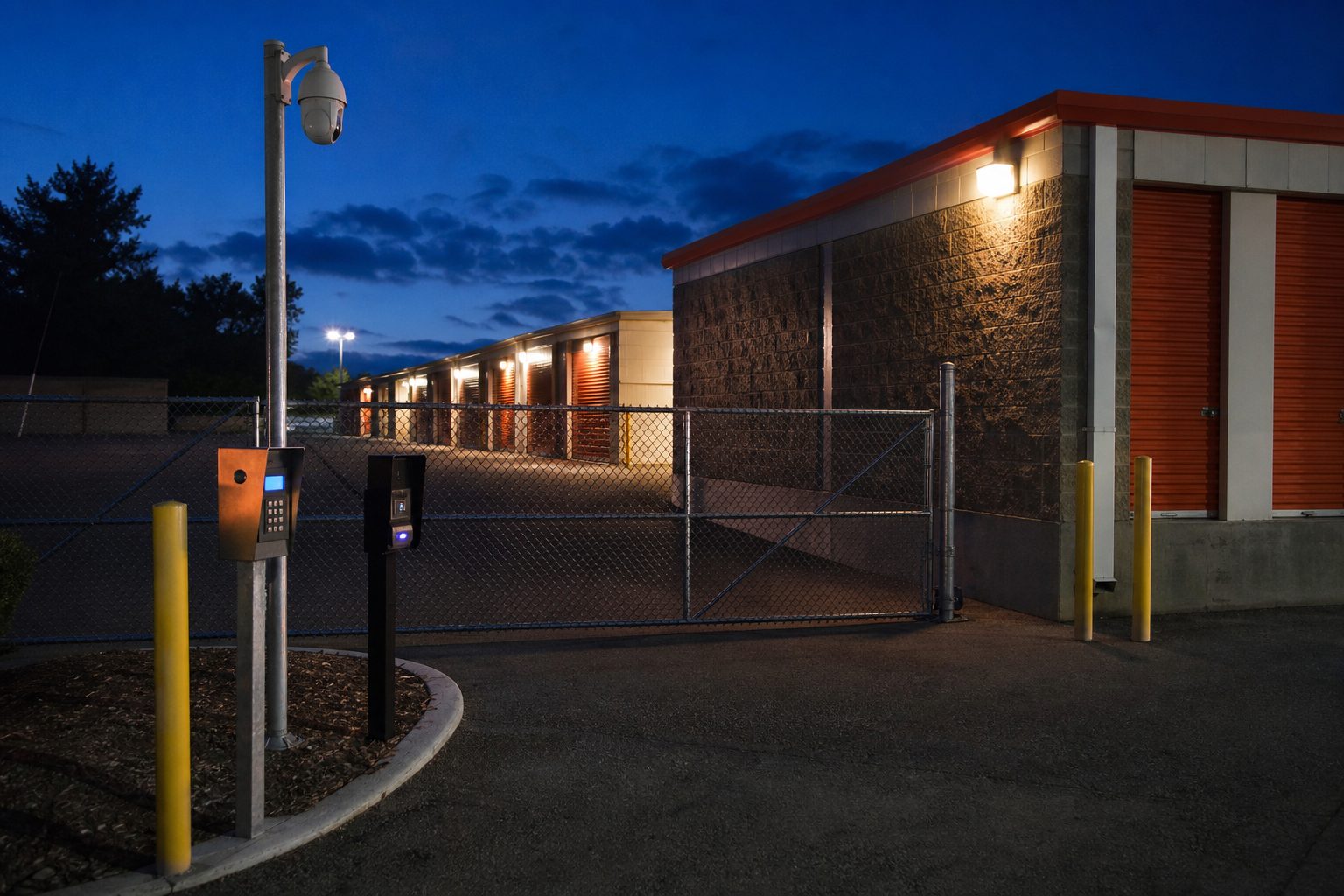
Handing over a gate code before the first payment has cleared
It is tempting to give a new tenant their gate code as soon as they sign the lease. You want to be accommodating, especially if they need to move in after hours. But if payment is pending, whether a check needs to clear, an ACH transfer is still processing, or a card payment is flagged as "pending", you risk giving access to someone who may never pay a dime.
This mistake leads to awkward moves where a unit is occupied but no money was ever received. If the tenant disappears, you face the slow process of reclaiming the space. If they contest the charges, you have little leverage, as you provided the service before collecting any funds. Some operators end up waiving delinquent rent just to regain the unit.
The best practice is to require cleared funds before issuing a gate code. For online move-ins, many platforms will automate this step: no code is generated until payment is confirmed. For in-person rentals, train staff to check for a green light from the payment system. If a payment is declined or held for review, hold the code until resolved. This keeps your occupancy and collections in order, and avoids unnecessary write-offs.
Letting a tenant swap units without a new agreement for the new space
Unit swaps are common in self storage. A tenant realizes their original unit is too small, too large, or not convenient for their needs, and asks to move. The mistake is letting the swap happen without a new, signed agreement for the new unit. Many staff believe a verbal note in the file is enough, or simply annotate the old lease. But this leaves the facility exposed to several risks.
First, if a claim arises, say, water damage in the new unit, you might have no record that the tenant was ever authorized to occupy it. This can nullify your liability limits or rules about insurance. Second, if the tenant defaults, your lien rights might be tied to the old unit, not the new one, making the sale process a legal minefield. Third, the rent for the new unit may differ, but without a new agreement, you are stuck with the old rate or terms.
Every unit change should trigger a new lease or at least an amendment that references the new space by number and describes the date of transfer. Require signatures, and collect any additional deposit or prorated rent at the time of the swap. Update your software and physical records to match. This keeps your occupancy, billing, and legal standing clear, no matter how many times a tenant moves within the facility.
Conclusion: Preventing paperwork errors from day one
The most expensive self storage problems trace back to intake errors, missing initials, incomplete addresses, unsigned waivers, and lost files. Each mistake looks small in the moment, but can cost months or thousands of dollars when a tenant defaults or a claim is made. The solution is a consistent, documented move-in process that leaves nothing to chance.
Modern online systems now guide tenants through every required field, capture digital signatures, and automate key steps like gate code activation and lease storage. Automated delinquency lockouts and live unit availability maps can help keep your records straight, while reducing human error. A tool that integrates these features gives operators the control they need to avoid the costly mistakes that surface long after move-in day.